Biotechnological Applications of Peruvian Plants and Microorganisms - A CodonCode Aligner User Showcase
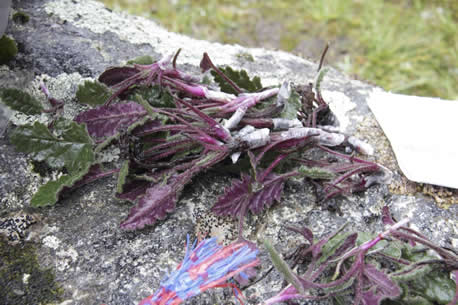
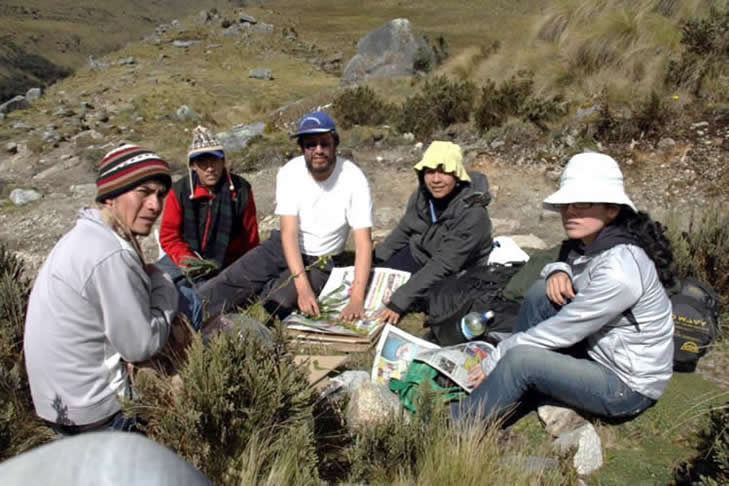
Dr. Carmen Tamariz Angeles studies the biodiversity of high andean Peruvian plants and microorganisms that can be used in pharmacology and biotechnology applications.
She uses CodonCode Aligner during her research at the Universidad Nacional Santiago Antúnez de Mayolo to help with the taxonomic identification of these organisms.
Her projects involve studies of:
- pharamcological effects and bioactive compounds
- enzyme production
- bioremedations
- promotion of plant growth for agricultural purposes
Microbial Biodiversity and Hydrolases Production in the Huancarhuas Hot Spring
|
Bacteria that produce lignocellulase are of high interest in the industry of biofuel production. The cost of producing enzymes that can convert biomass into biofuels like ethanol is high, therefore thermotolerant enzymes are specifically interesting for industrial processes. Therefore this research project was focused on isolating xylanase and cellulase producing bacteria from a Peruvian hot spring.
|
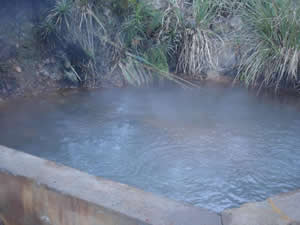
Huancahuas hot spring
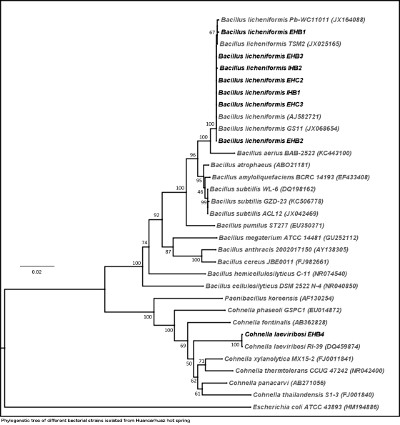
From 19 different bacterial isolates 8 showed promising activities on carboxymethyl cellulose and xylan agar plates. Phylogenetic analysis identified these 8 bacterial strains using the 16S rRNA gene. Seven isolates were identified as Bacillus licheniformis and one as Cohnella laeviribosi. C. laeviribosi EHB4 had the best xylanase and endoglucanase production and may contribute to the development of biomass bioconversion processes. Additional research showed that this strain has the hydrolytic capability to degrade agronomic waste containing cellulose and hemicellulose. Dr. Carmen Tamariz Angeles and her team are expecting to research involved genes. Looking at the microbial biodiversity in the Huancarhuas hot spring (16S rDNA) has shown the presence of Geobacillus and Anoxibacillus. The isolated strains have hyperthermophilic enzymes that degrade lignocellulosic waste. Multilocus analysis will be conducted for further species resolution. |
Studying Microorganisms for Bioremediation
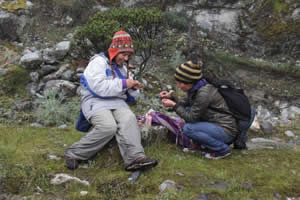
This project focuses on the identification of bacteria and filamentous fungi from soil mining waste. Dr. Tamariz Angeles' team has isolated microorganisms that show a tolerance towards heavy metals. The identification was made in collaboration with the Biodiversity Institute of Ontario. Species that showed promising results included Penicillum, Fusarium, and Mucor.
Current research is directed towards microorganisms from polluted areas in the high Andes. Different bacteria and fungus were isolated from several plants. These microorganisms show a diverse ability to promote plant growth, tolerate heavy metals, and some even solubilize heavy metals. The promising microorganism that could be used for bioremediation still require taxonomic identification, and will be evaluated in additional molecular studies.
Bioactive Metabolites in Plant-Growth Promoting Microorganisms
Endophytic microorganisms were isolated from medicinal high andean plants for this research project. The microorganisms were screened for antimicrobial and antioxidant activities, as well as their plant-growth promoting capability. Interestingly, the molecular taxonomic identification of the samples showed that some fungi and bacteria strains could be unknown species. In these case the next step will be Multi Locus Sequence Typing (MLST). Dr. Tamariz Angeles is also planning to study the genes involved in the capabilities of the endophytic microorganisms.
Taxonomic identification is needed for the use of plants in biotechnology. For this reason Dr. Tamariz Angele is preparing the DNA barcodes of plants from her research - mainly promising wild medicinal and threatened plants. She also collaborates with a conservation project which includes plant tissue cultures and the reference herbarium "David Smith Herbarium - UNASAM".
 Siderophore production by endophytic fungus |
 Phosphate solubization by endophytic bacteria |
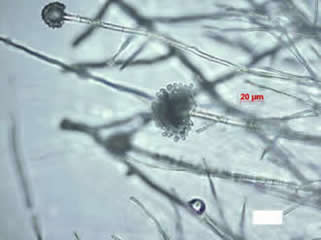 Microphotography of a strain of Aspergillus isolated from high land soil |